Doctoral Program in Biochemistry
Program Chairperson: Lipke, Peter N
Location: 200 Ingersoll Hall Extension
Phone: 718.951.5396
Fax: 718.951.4659

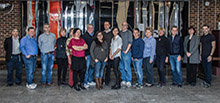
At Brooklyn College, the biochemistry faculty is drawn from the Biology and Chemistry departments, offering doctoral students interested in biochemistry a vibrant, interdisciplinary, and research directed-program that is designed to foster both research training and opportunities for professional development that will give students more options for their careers after their Ph.D's are completed. The biochemistry faculty currently numbers fifteen; over half are women, with a low student-to-faculty ratio.
Research
The biochemistry faculty offers research specialties in: drug design and discovery; protein signaling, structure, conformation and function; membrane and membrane proteins (signaling, fertilization and dynamics); microscopy and spectrometry of biological molecules; and laser studies of conformation and dynamics of biological systems. Research groups work in areas of biophysics/physical chemistry, computational biochemistry, bioinformatics, and molecular biology. Some members of the faculty also participate in a CUNY-wide initiative in macromolecular assemblies.
Grant Support and Research Resources
Research by biochemistry faculty at Brooklyn College is supported by current research grants totaling over $7.4 million from the NIH, the NSF, and other agencies. Some of the facilities and equipment available to students doing research in the biochemistry program are described here. The college already has up-to-date facilities and equipment for research that will be enhanced by a new science building now in the planning stages.
The new Brooklyn College Library, considered the most technologically advanced in the CUNY, has electronic access to 28,000 journals.
In addition, there is the opportunity to share equipment located in the departments of Physics and Geology. and to have access to facilities in AREAC, a state-of-the-art marine-culture facility for environmental and behavioral research, and the Environmental Science Analysis Center for analysis of environmental parameters and toxins, among other shared equipment resources.
The departments of Biology and Chemistry are both well equipped for biochemical studies, with many new facilities for molecular, biochemical, biophysical, computational biological, and bioinformatic approaches.
The Brooklyn College Doctoral Program in Biochemistry
The atmosphere in the biochemistry program is personal, cooperative, and supportive. Highlights of the program are weekly seminars by visiting scientists, research meetings, and journal discussions.
Chemistry, biology, and biochemistry students populate the research labs, carrying out dissertation projects in subjects such as discovery of antitumor, antitubercular, antimalarial, and antifungal drug targets; bone mineralization; fuel production; molecular evolution; protein and nucleic acid structure and dynamics; organelle trafficking; cell-cycle regulation; and the role of cytoskeleton in cellular function. The college already has up-to-date facilities and equipment for research that will be enhanced by a new science building now in the planning stages. Research interests of the biochemistry faculty are described further below.
To ensure our doctoral students are competitive and have many career options after they obtain their degrees, Brooklyn College provides professional development workshops in such areas as science teaching, grant writing, laboratory management, effective scientific communication, writing in the sciences, building a competitive curriculum vita, and searching for academic, industrial and research jobs. Our commitment to our students is not complete when they file their dissertations-our faculty members continue to provide a supportive professional mentoring network to our students as they advance in their careers. Graduates of the biochemistry program go on to excellent post-doctoral fellowships, academic jobs, and industrial positions.

Biochemistry Program Faculty
- Davenport, Lesley, Biochemistry, Biophysics, Structural Biology, Lipids and Membranes, Protein Folding
Research focuses on conformation, dynamics and interactions of important biomolecules and assemblies using state-of-the-art optical methods including fluorescence and circular dichroism; currently we are studying the dynamics of quadruplexed DNA found within telomeric DNA located at the end of chromosomes, and which is a target for the interaction of potential chemotherapeutics.
- Dowd, Terry l., Biochemistry, Analytical
Research focuses on investigating the role of the protein osteocalcin in bone during lead toxicity and/or low Mg2+ diets. Mineral and matrix properties are examined in wild-type and osteocalcin knock-out mice using Fourier Transform Infrared Imaging and Micro-computed tomography.
- Eshel, Dan, Cell Biology
The Eshel laboratory is investigating signal transduction pathways that control and regulate the dynamics and function of microtubules in cells. These studies use molecular genetics approaches in the budding yeast Saccharomyces.
- Forest, Charlene, Cell Biology
Research focuses on fertilization in Chlamydomonas reinhardtii with specific emphasis on identification of proteins required for gamete fusion. Cell biology, molecular biology and bioinformatic approaches are used to investigate production and function of proteins potentially involved in membrane fusion. We are also investigating regulatory sequences required for minus gamete expression.
- Gibney, Brian R., Bioinorganic and Biophysical Chemistry
The Gibney laboratory is interested in understanding how proteins fold, incorporate metal ions and perform catalysis. The research approach uses detailed thermodynamic analysis of metal-peptide and metal-protein interactions to understand fundamental metalloprotein structure-function relationships. Currently, lab personnel are studying the role of Zn(II) in protein folding and the role of porphyrin structure on heme biochemistry.
- Ikui, Amy E., Cell Biology, Genetics
The cell cycle is an ordered set of processes by which one cell grows and divides into two daughter cells. Cell-cycle progression is driven by Cyclin/Cdk complexes. Ikui's research studies the molecular targets of Cyclin/Cdk, and the biological importance of the new cyclin targets.
- Jarzecki, Andrzej A., Theoretical Chemistry
Research focuses on the quantum-mechanical estimate of a molecular wave function. Wide application of electronic structure calculations to predict structure, reactivity and spectroscopic properties of molecules. Special focus on recent developments in biological inorganic chemistry; structure and function of various metalloproteins and mechanism of poisoning by heavy metals such as lead and mercury.
- Juszczak, Laura J., Biophysical Chemistry
The photophysics of tryptophan and its model compounds. The interaction of tryptophan with metals; interpretation of the UV resonance Raman spectrum of tryptophan with respect to protein environment and structure. Correlated interpretation of UVRR and fluorescence spectra for tryptophan. Spectroscopic methods: primarily UV resonance Raman but also including IR, steady-state fluorescence, absorption and circular dichroism.
- Lipke, Peter N., Biochemistry, Cell Biology, Bioinformatics
Research interests include role of amyloid interactions in structure and function of cell adhesion proteins that mediate pathogen-host interactions and biofilm formation. Lipke's lab has recently discovered a key role for protein amyloids in cell aggregation and biofilm formation. The work uses molecular biology, protein chemistry, spectroscopy and bioinformatics to study domain structure and activity. The lab also studies biogenesis of fungal cell walls and their role in disease. It uses bioinformatic approaches to both protein structure and evolution to show how structures evolve and function.
- Magliozzo, Richard, Biochemistry
Research focuses on exploring the origins of resistance to the antibiotic pro-drug isoniazid; spectroscopic and kinetic methods are used to study the structure and function of the heme enzyme catalase-peroxidase from Mycobacterium tuberculosis to learn why mutant enzymes are inactive for activation of isoniazid.
- Ovalle, Rafael, Microbiology
In the Ovalle laboratory, there are two parallel lines of research on cell walls: 1) surveying novel compounds for antifungal activity, and 2) understanding the processes of modification, transfer and anchorage of GPI-proteins in the fungal cell wall.
- Polle, Juergen, Biochemistry
Work in the laboratory includes fundamental and applied research with microalgae.
1. Molecular biology, biochemical and biophysics methods are used to investigate regulation of the switch from primary to secondary metabolism in microalgae.
2. Lipidomics of microalgae.
- Saxena, Anjana D., Biochemistry, Genetics
Saxena's research focuses on checkpoint-tumor suppressor signaling using the tools of molecular genetics and biochemistry to investigate the role of nucleolin in regulation of the p53/p14ARF pathway.
- Singh, Shaneen M., Bioinformatics
The long-term research goal is to apply computer modeling to gain insight into cellular signal transduction pathways, specifically to provide deeper insight into both the normal and aberrant sub-cellular targeting of domains contained in proteins.
- Studamire, Barbara, Biochemistry, Genetics
Work in the laboratory focuses on the influence of host factors and chromatin conformation on retroviral integration and replication. We have identified a large number of integrase-interacting host factors, and wish to assess their effects on retroviral integration and viral replication. Among the techniques we use to address these questions are gene knockdown (by RNA interference), molecular biology, protein over-production and genetics.
|